

Planetary Age Calculator
Your Age Across the Solar System
Age is a measure of how many times you've orbited the Sun. On Earth, one orbit takes about 365.25 days—what we call a year. But every planet in our solar system orbits at a different speed, meaning your "age" varies dramatically depending on where you stand. This astronomical perspective offers a fascinating way to understand planetary motion and time itself.
Detailed Planetary Orbital Periods
Each planet's year length depends on its distance from the Sun:
☸️ Mercury: The Speed Demon
Orbital period: 88 Earth days. As the closest planet to the Sun, Mercury whips around its orbit nearly 4 times per Earth year. A 30-year-old Earthling would be 124 Mercury years old! However, a Mercury day (sunrise to sunrise) takes 176 Earth days—longer than its year.
♀️ Venus: Earth's Twisted Twin
Orbital period: 225 Earth days. Venus orbits faster than Earth but rotates incredibly slowly—and backwards! A Venus day lasts 243 Earth days, longer than its year. A 30-year-old would be about 48 Venus years old.
🌍 Earth: Our Home Base
Orbital period: 365.25 Earth days. This is our reference point. The extra 0.25 days is why we have leap years every 4 years (mostly). Earth's 23.5° axial tilt gives us seasons.
♂️ Mars: The Red Planet
Orbital period: 687 Earth days (1.88 Earth years). A Martian year is nearly twice as long as Earth's. A 30-year-old Earthling would be about 16 Mars years old. Mars rovers celebrate "anniversaries" in Mars years!
♃ Jupiter: King of Planets
Orbital period: 4,333 Earth days (11.86 Earth years). Jupiter is so far from the Sun that a single year takes nearly 12 Earth years. A 30-year-old is only 2.5 Jupiter years old. Jupiter's Great Red Spot storm has raged for at least 3-4 Jupiter years.
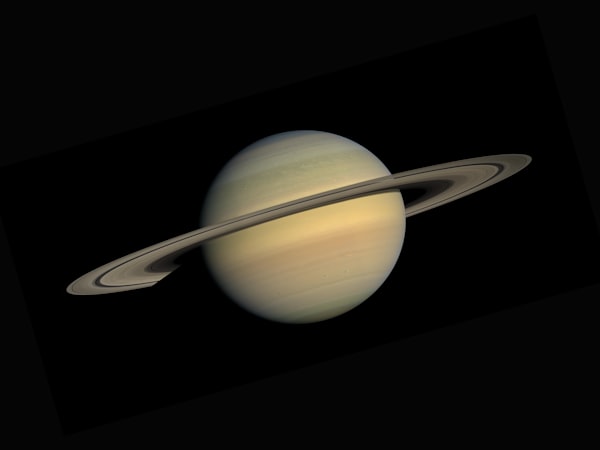
🪐 Saturn: The Ringed Giant
Orbital period: 10,759 Earth days (29.46 Earth years). Saturn takes nearly three decades to orbit once. A 30-year-old has just completed their first Saturn year! Saturn's rings would fit between Earth and the Moon.
⛢ Uranus: The Sideways Planet
Orbital period: 30,687 Earth days (84 Earth years). Uranus is so distant that a human might live their entire life within a single Uranus year. It also rotates on its side due to an ancient collision.
♆ Neptune: The Distant Blue
Orbital period: 60,190 Earth days (165 Earth years). Neptune is so far away that it only completed its first observed orbit in 2011 (discovered in 1846). No human has ever lived through a complete Neptune year.
Dwarf Planets and Beyond
- Pluto: 248 Earth years per orbit—Pluto hasn't completed one orbit since its 1930 discovery
- Eris: 558 Earth years per orbit
- Sedna: 11,400 Earth years per orbit!
Space Travel Time Perspective
How long would it take to reach these planets?
- Moon: 3 days (Apollo missions)
- Mars: 6-9 months (current technology)
- Jupiter: 2-6 years (Juno took 5 years)
- Neptune: 12+ years (Voyager 2 took 12 years)
Did You Know?

If you lived on Neptune, you'd only celebrate a birthday once every 165 Earth years! No one has ever been old enough to celebrate even one Neptune birthday.